
How RSS Disappeared from the Mainstream
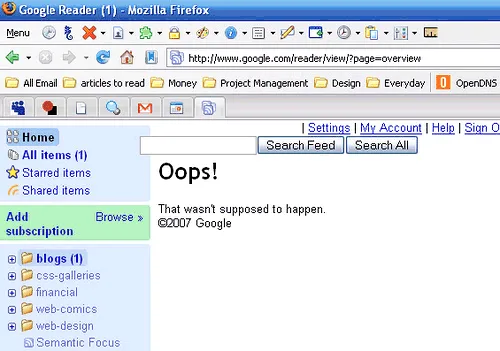
There was a time, back in the 2000s and early 2010s, when RSS was nearly mainstream. All enthusiasts knew it, and most used it. Websites prominently featured their RSS buttons. Web browsers had built-in RSS support. And Google Reader made RSS accessible to regular users. But what happened?

The End of Google Reader
Google shut down Reader, removed RSS support from Chrome, and RSS became hard to use for most users. Most likely, Google Reader was an expensive distraction for Google that didn't generate any revenue. Back then, social networks were all the rage, and Google wanted a share of the pie with Google+. For a while, it looked like social media could replace RSS readers, and user numbers were declining as people spent more time on social networks. Of course, that was at a time when social networks weren't really monetized either and didn't have nearly the volume of advertisements they have today.
Without Google, not only did the biggest brand name supporting RSS disappear. The remaining RSS readers were mostly designed for enthusiasts. Capable, but packed with complicated features mostly relevant to power users, full of jargon and with less user-friendly design. Like many others, I switched to Feedly back then, as it was the most similar available reader and they made it easy to migrate. But today, it looks like Feedly has mostly pulled out of the market and pivoted to the more profitable market of threat intelligence. Feedly can still be used as an RSS reader, but go to their website, and you see a threat intelligence tool, not a reader.
RSS Readers from a Beginner's Perspective
Let's say you've heard about RSS readers being a great invention, and you Google it. This is what Google returns: 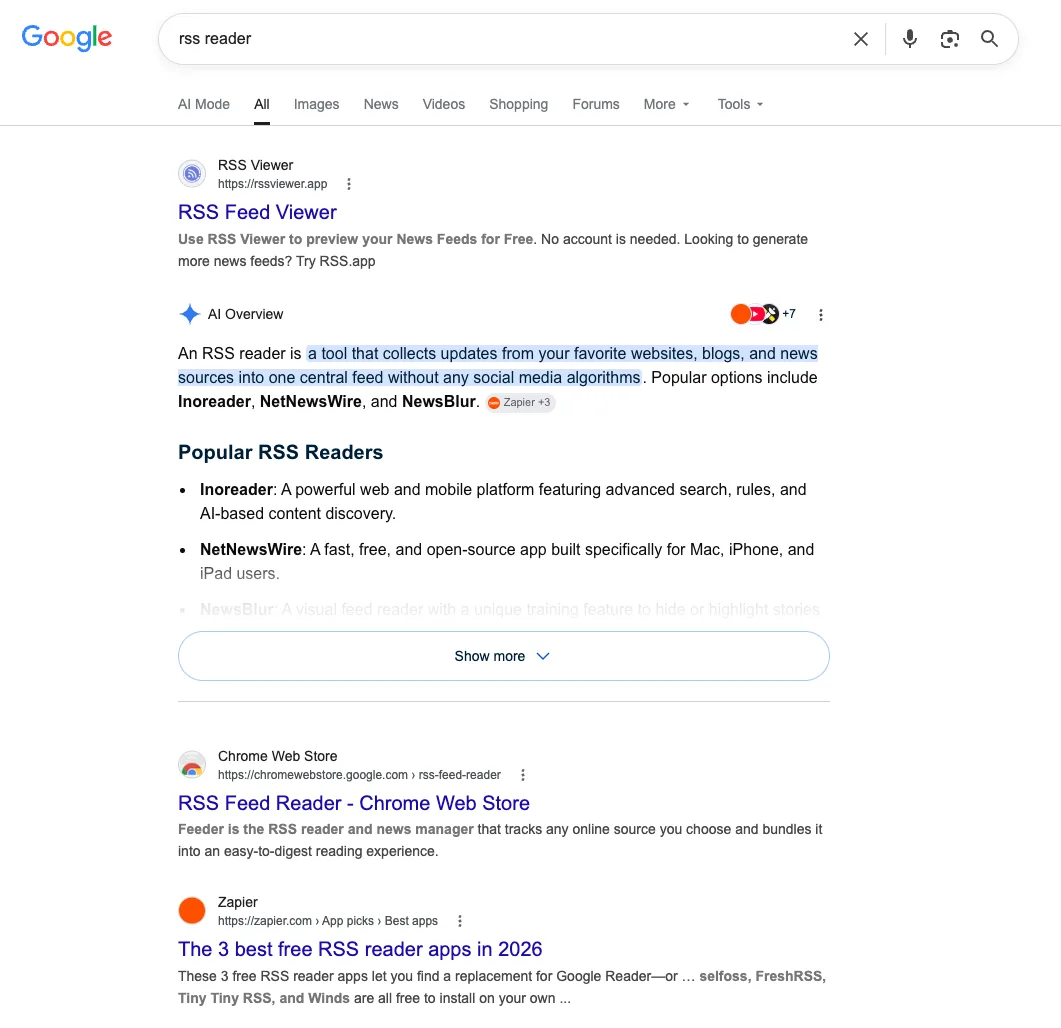
Your first hit is rssview.app. You open it, and this is what you see: 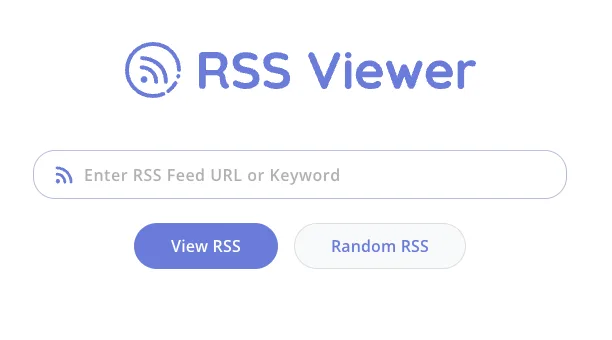 Technically, it's an interesting reader that allows you to read a feed without logging in. But for a new user, that's just incomprehensible mumbo jumbo with no easy way of understanding how this can work. Just want to read the New York Times? Not a chance!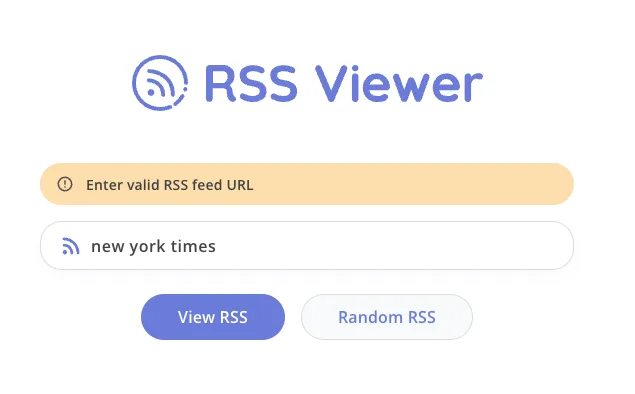
Current RSS Readers Are for Power Users
Thankfully, Google's AI Overview lists some popular RSS readers. The first one is Inoreader. Arguably the most powerful reader on the market, and with a generous free plan. But I'm not sure this landing page, and especially the screenshot, appeals to non-technical first-time users of RSS. 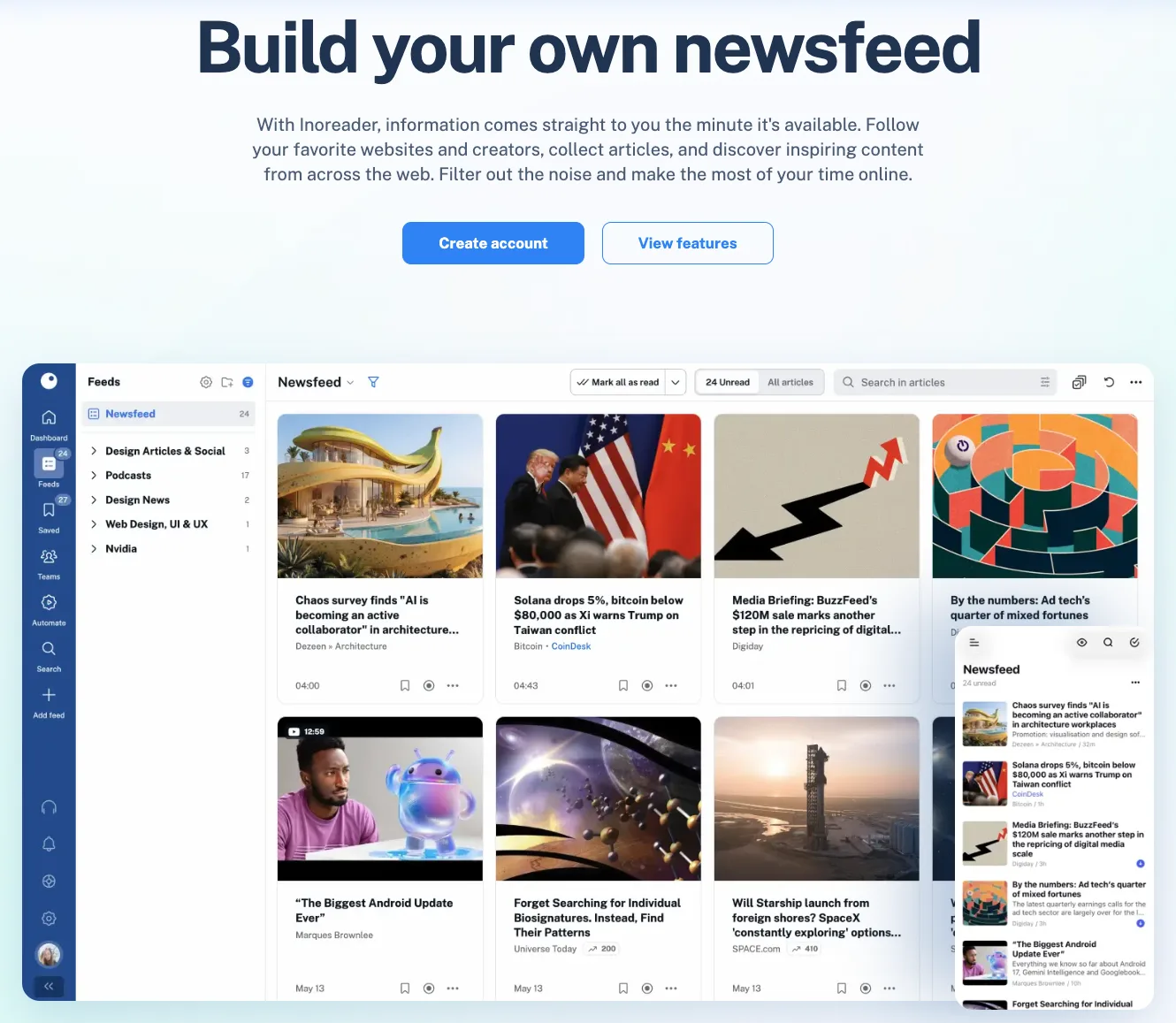 Without any doubt, Inoreader is a great product for power users. But it's not an attractive product for first-time users.
NewsBlur is similar. It's more like a power tool, designed for maximum functionality, not for usability. 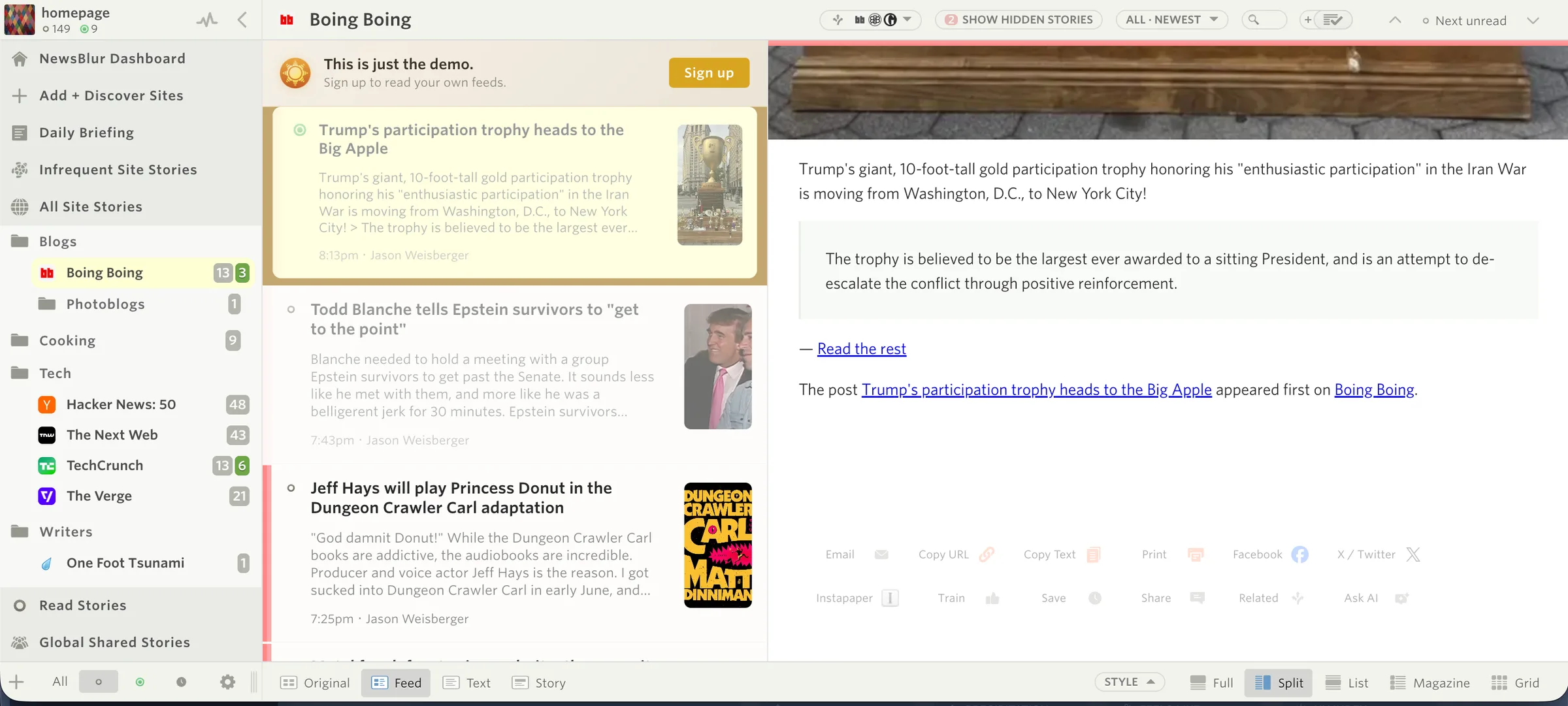
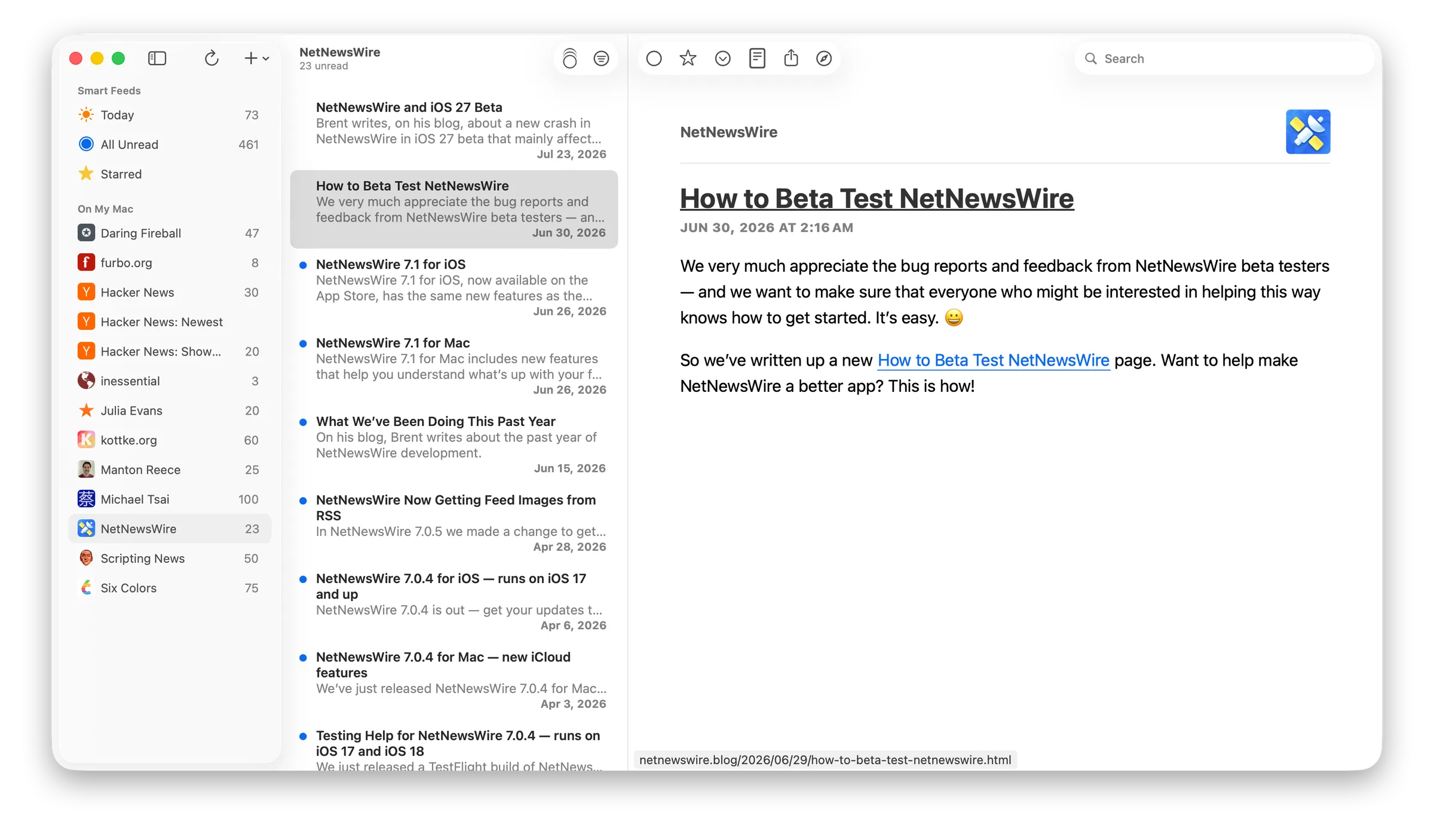
NetNewsWire's simple interface is closer to a feed reader that is easy to use. Without any doubt, it is simple and clean. It just doesn't make it easy for the user. There is no catalog of feeds, no help managing feeds, and no web version.
The Content Publisher Dilemma
However, RSS readers are far from the only challenge for RSS. The sad truth is, it's hard to make money from offering an RSS feed, especially for ad-financed sites. While RSS feeds can generate additional traffic for articles, at the same time, every user who does not visit the site's homepage is a user who won't see the site's ads.
The case is even more difficult for publishers who publish not just summaries or headlines, but whole articles through RSS. These publishers will see zero revenue from RSS. At best, they can place some affiliate links.
In the end, it's also a blessing that the number of RSS users is not that significant, as the possible loss in ad revenue stays low that way. If most users used RSS, there would be much more scrutiny about the cost and benefit of RSS feeds, and we might end up with fewer RSS feeds than today.
How Can RSS Get (Back) to Mainstream Users?
I believe there are two things missing for RSS to really thrive.
ubiquitous RSS readers: just look at podcast apps. They come with phones; they are bundled in services like Spotify; and they are easy to use. Everybody is just a click or two away from listening to a podcast. Reading an RSS feed is far more complicated. Either RSS readers must be as widespread as podcast apps, or there needs to be a well-known RSS reader that everybody can easily find.
a business model for feeds: this may be the bigger issue. Many feeds just offer summaries, so they can create revenue with users on their own website. Some sites offer full-text feeds for subscribers (like The Verge does), but this is rare. An easy system to allow publishers to get paid when a user reads their feed would go a long way in motivating them to promote their RSS feeds.
Until we have at least one of those things, ideally both, RSS readers will stay a niche product.
Post image at the top by Ashley Dryden, licensed CC BY 2.0 Attribution